Showing posts with label university physics. Show all posts

Sunday, April 05, 2009

Chicken and Duck

CY [3:03 PM]:
..........what's the difference bet. CMOS and VDMOS?
Colleague_A [3:03 PM]:
.......... CMOS included NMOS and PMOS
.......... VDMOS is vertical DMOS
.......... i dun know how to answer ur Q
.......... do i answer ur Q correctly ?
CY [3:05 PM]:
.......... can we say CMOS and VDMOS are the same?
Colleague_A [3:06 PM]:
.......... definitely NO
.......... it's chicken and duck
CY [3:07 PM]:
.......... which one is the chicken?
.......... CMOS = chicken MOS
.......... VDMOS = vertical duck MOS
.......... ok, got it
Colleague_A [3:08 PM]:
.......... sure .....

Sunday, February 10, 2008

On Physics, Education and Blogs

With slightly more than two months left to graduation, Karljam looks inside himself and asks some pertinent questions...

Q: What attracted you to Physics?


A: I must say that I only really began to develop an interest in Physics after starting my first year of undergraduate studies. This interest was due to firstly, the novelty of starting an in-depth course purely in physics, as opposed to the terribly burdensome studies during STPM where a student is expected to gorge down and master everything from Chemistry to Maths to General Studies -- in this regard, you can understand the liberating feeling of only having to study only one subject, technically; secondly, as I realized that day-to-day happenings obey or can be described by very simple equations. For example, the way a ball flies when thrown obeys the dynamical equations, such as v = u + at (the final speed* of an object equals its initial speed* plus the product of acceleration and time**).

* more accurately, velocity, which just means speed at a specified direction.
** assuming friction and the effect of gravity are ignored.

So you didn't like physics in your secondary days?

To tell you the truth, I hated physics in my secondary days. I believe it was largely due to the Malay medium used to teach the subject and also the too-carefully worded text books which are obsessed in covering all and only all of the planned syllabus. Due to the highly exam-oriented education structure, even the revision books tended to follow a similar obsession in ensuring they seldom cover anything outside of the syllabus. These factors combine to contribute in the subject being very dry and frankly, boring.

I must admit that I also never really 'got' Chemistry and Biology, with the latter being my worst. The teacher that shook her head every time she returned my test papers did little to boost my confidence nor love for the darned subject.

What made you change your mind about physics?

Things changed for the better as I entered form six, as the year I entered lower six was the first year of the switch to English (for science and maths). Immediately, the science subjects (here I'm referring to physics and chemistry, I never got Biology, and still don't) became so much more interesting, for two main reasons.

Firstly, because I feel English is the more natural subject for the sciences since more literature is available in English than Malay. Academic books in Malay would actually fare better if they were not either awkwardly translated from English or included many 'borrowed' words from English that the student would be better off reading in the original language.

And secondly probably because the syllabus of form six introduces in much more detail and provides more explanation behind the physical theories as compared to previous forms (obviously), thus making the learning process more thorough and more logical, in that sense. Where previously theories were glossed over and simplified, now I became more aware of their definitions and limitations.

But the main thing that spurred my 'love', if you can call it that, for physics was my experience in practicing to enter a national-level physics competition. At that time, my physics knowledge was hardly commendable, I wasn't top of the class, but the pure faith that my teacher, Ms. Choong Lai Yong had in me and two of my friends who were also joining the competition, spurred me to try my best to understand as much physics as possible in preparation for the big day. Ms. Choong was also the first (and remains the only) teacher I met that kept providing three of us personal coaching lessons, sometimes staying back until late hours after school -- once or twice even coming to school on a Saturday morning to do so!

How much do you love physics? What is your approach to education?

I must state that when it comes to physics, I tend to associate it in an academic way. And when it comes to academics, I've always somewhat handled it in a happy-go-lucky, couldn't-care-less attitude, though always in the midst of too many tests and examinations, I tend to get caught up in the heat and start to panic and get all geeky as well.

If you were to consider my years of education as a whole, these feelings usually swing to and fro as in a pendulum, between extremities. In my first year of undergraduate studies, I was particularly carefree because at that time, I viewed this educational passage as kind of a joke, and also because of the relative security of university studies as compared to the sixth forms.

As fate would have it, my carefree attitude began to drive up my interest as well as my grades. By the end of the first year when I entered the Dean's List, my 'security bubble' crumbled. You see, despite my projected nonchalance, deep inside I secretly hoped to achieve the Dean's List to prove to myself that I could do it -- someone with such an affinity to arts could do well in science? -- and also to prove that the award was nothing to shout about -- a silent way of getting back at Dean's Listers who became proud and arrogant as if they've conquered the world.

I was soon to be proven wrong. No, the award does not cost nothing -- it got me inducted into an international honour society, which trained my public speaking skills and gave me the chance to perform community service. If I didn't have a Dean's List, I wouldn't be eligible to join the society, I wouldn't have experienced the excitement of real public speaking, I wouldn't have done community service. No, the award does not mean nothing -- in a strange way, the award somewhat elevated me to a higher level on the academic scale, and got me noticed among my peers and colleagues. No, I couldn't change the world -- those arrogant pricks who thought they owned the world carried on their misguided egos. One humble Dean Lister makes no difference.

And NO, examinations are NOT mere formality. Examinations got me this award, and this award got me everything... But what really tipped my boat was the strength that the award (and the honour society membership) lent to land me an internship with a multinational company.

There was no turning back. I've come so far, that taking it easy was no longer an option. The carefree me of yesteryear had to be obsoleted. My bubble of security, was no longer intact.

So do you still think the Dean's List is a mere piece of award?

I still believe so. It's just a certificate, easily obsoleted as soon as one enters the working world. That is, if one chooses to work in the industry. If one pursues research or the academic line, the award will hold relevance for much longer.

So yes, I still believe it's not as valuable as it is hyped up to be. But after all that it has 'done' for me, I can no longer say that it is worth nothing. I mentioned my bubble bursting and my boat toppling over? I've never quite recovered from the confusion, as yet.

Does physics still impress you today?

I still maintain the inquisitive nature and joy at learning new things, though these days it's mostly about semiconductor fabrication processes and solid state physics, which, though interesting, are markedly harder to relate to real life or day-to-day happenings.

For example the concept of the 'reciprocal lattice' where the space that we know is theoretically inverted. This is so we could describe the energy and momentum of a material's structure, which is stated in terms of the reciprocal length (1 over length, instead of length). This 'reciprocal lattice' is very hard to relate to the world we know, because it just doesn't exist. Rather, it's a theoretical model invented for the sake of describing the world we know, which is a material's energy and momentum.

So your concern is that as your physics knowledge ascends to a higher level, the harder it is to relate them to the real world?

Yes.

But one can't dwell on the dynamical equations forever...

True, the simple concepts serve only as a foundation for higher knowledge. It would be dumb and highly unnatural to keep on being fascinated by the same thing.

There's a chance that you might become a lecturer in future, is that right? If so, there's a chance that your future students might stumble upon this post and read it. What do you hope they'll learn from these thoughts and experiences?

Yes. And to your second question, nothing.


There's also a chance that you might become a researcher. What will you think to future colleagues reading this archived post in future?

I believe posts like this bring out the human side in us and encourage other people's understanding of us. There is one scientist that I know of currently who uploads photos of his family and blogs about his numerous holiday tours. While these things are conventionally of a personal nature, they help to paint a very wholesome and human picture of the individual.

Besides, blogs are still considerably 'new' and 'alien' to the current working generation. In a few years' time, be it the manager, teacher, lecturer, doctor, nurse or secretary, all would have one time or another maintained a personal blog. Whether this will help or hinder them, is still too early to be said. Right now, it's hard to imagine your teacher or lecturer having a blog... This trend is soon to change in due time.

Will employment or potential employment cause a frenzy in deleting personal sites such as blogs and profile pages which might reveal more than necessary information?

A scary thought. But we shall see...

Friday, September 21, 2007

Nanotechnology: An interesting analogy

Grabbing hold of a giant table, he pushes from behind and tilts it toward us.

"Imagine that this table's top surface is made of metal. The atoms on the four sides react differently from the ones at the centre. This is because the atoms at the sides don't have nearest neighbours, hence their behaviour is different.


"Just like you all are sitting now. Those of you sitting in the second, third rows are surrounded by your friends, and think that I can't see you. But the ones at the front row don't have neighbours in front. They pay full attention. That's why I always ask you to sit in the front row; your behaviour becomes different."

Dr. Roslan pulls up a chair and places it in front of the first row.

"Now, you, sit here."

Jyy Tyng gingerly went and sat in the lone chair, starting to fidget nervously.

"See? When I take him out, his behaviour becomes different! Thank you. You may go back to your seat.

"The same thing happens if we take out an atom from a material. Its behaviour becomes different.

"For example, if we shine light onto a big piece of silicon, nothing happens. But if we separate out one silicon atom, and we shine light onto it, the atom produces more light. The light is amplified.

"Dealing with things on the atomic level and getting results we never could obtain from a large-scale material, this is nanotechnology.

"That's why it's so exciting!"


Credits to Assc. Prof. Dr. Roslan Hashim, School of Physics, USM for his unpredictable, entertaining lectures.

Friday, August 03, 2007

A 'Rapid' analogy

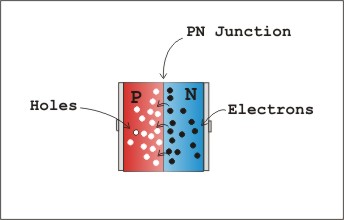
"Why is it," my lecturer asked, pointing to a diagram of a p-n diode, "that the holes and electrons stop moving after some time?"


"Because the negative charges left behind repel the electrons?" I volunteered.

"If you were to take a Rapid from here to Tanjung Bungah", he paused for dramatic effect, "you would only reach Jelutong".

The class roared with laughter.

I must admit that I hesitated a bit to answer his subsequent questions.

Perhaps, he could have done away with that Rapid analogy.

Friday, July 27, 2007

All Kinds of Crystals

Diamond is a crystal, and so are salt and sugar.

Things which are crystals are able to maintain their original shape no matter how many times they are broken up. A common misconception is that glass is a crystal. This is not true, because when glass is smashed, it breaks into totally different shapes.

How many types of crystals are there?

It all begins with a simple cube...


From the diagram above (click on it to enlarge), we see that by pushing and pulling on a simple cube, we get other possible forms of crystals. The seven crystal structures (shaded in gray) are cubic, tetragonal, orthorhombic, monoclinic, triclinic, trigonal and hexagonal.

So, the next time you eat at McDonalds', open a packet of salt and look closely. You're looking at a cubic structure!


Diagram adapted from Dr. Sohail Khan's lecture notes, Essentials of Solid State Physics.
Introductory text adapted from Dr. Abdul Halim's lecture on
X-Ray Analysis.